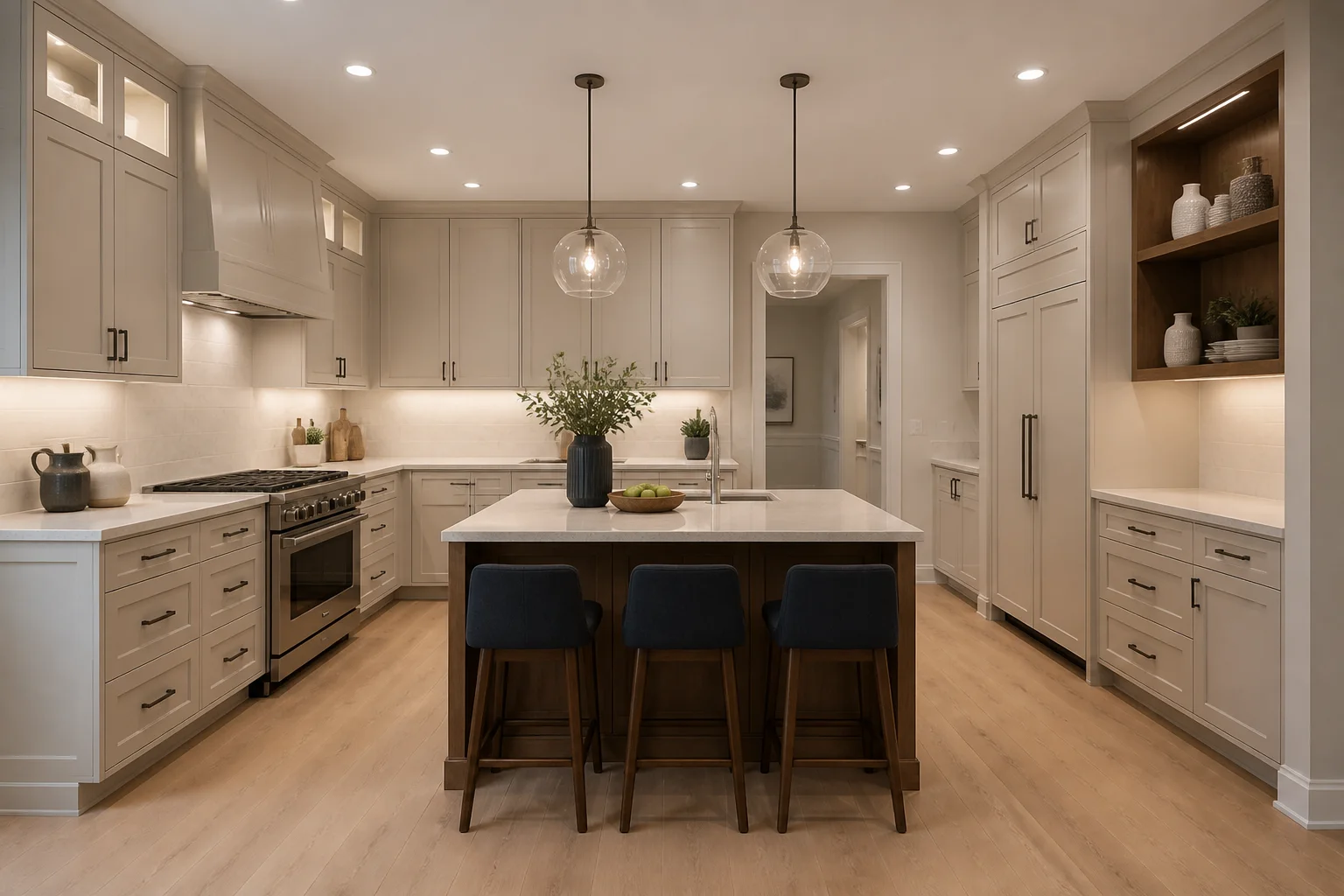
 3000K
3000K
Side-by-Side Decision
3000K is warm-neutral, versatile and comfortable in living spaces. 4000K is neutral-cool, crisp and task-forward; the jump can materially change how warm finishes and adjacent rooms feel.
Best Uses by Room
Kitchens and bathrooms can use either temperature depending on the desired atmosphere. Offices and garages often favor 4000K, while bedrooms and living rooms generally favor 3000K for ambient residential use.
Same-Room Comparison
Compare the controlled kitchen visual above: 3000K preserves a warmer residential character, while 4000K gives counters and cabinets a crisper, more task-forward appearance. The unchanged scene and crop make the color-temperature difference easier to judge without unrelated visual variables.
Brightness & Color Quality
4000K is not automatically brighter. Lumens describe light output, while CRI, tint, glare, optics, dimming and fixture placement influence how either option looks.
Coordinating Adjacent Rooms
In an open plan, 4000K beside a much warmer living area can create a pronounced boundary. A 3000K-3500K choice often creates smoother residential continuity.